High Priest (Hebrew: כהן גדול Kohen Gadol; with definite article הַכֹּהֵן הַגָּדוֹל ha'kohen ha'gadol, the high Priest; Aramaic Kahana Rabba)[1] was the title of the chief religious official of Judaism from the early post-Exilic times until the destruction of the Second Temple in Jerusalem in 70 CE. Previously, in the Israelite religion including the time of the kingdoms of Israel and Judah, other terms were used to designate the leading priests; however, as long as a king was in place, the supreme ecclesiastical authority lay with him.[1] The official introduction of the term "high priest" went hand in hand with a greatly enhanced ritual and political significance bestowed upon the chief priest in the post-Exilic period, certainly from 411 BCE onward, after the religious transformations brought about by the Babylonian captivity and due to the lack of a Jewish king and kingdom.[1]
The high priests belonged to the Jewish priestly families that trace their paternal line back to Aaron, the first high priest of Israel in the Hebrew Bible and elder brother of Moses, through Zadok, a leading priest at the time of David and Solomon. This tradition came to an end in the 2nd century BCE during the rule of the Hasmoneans, when the position was occupied by other priestly families unrelated to Zadok.[2]
Line of the High Priests of Israel
- Joazar ben Boethus, 4 BC
- Eleazar ben Boethus, 4-3 BC
- Joshua ben Sie, 3 BC - ?
- Joazar ben Boethus (restored), ? - 6 AD
- Ananus ben Seth, 6-15
- Ishmael ben Fabus (Phiabi), 15-16
- Eleazar ben Ananus, 16-17
- Simon ben Camithus, 17-18
- Joseph ben Caiaphas, 18-36 (son-in-law of the high priest Ananus ben Seth)
- Jonathan ben Ananus, 36-37
- Theophilus ben Ananus, 37-41
- Simon Cantatheras ben Boethus, 41-43
- Matthias ben Ananus, 43
- Elioneus ben Simon Cantatheras, 43-44
- Jonathan ben Ananus, 44 (restored)
- Josephus ben Camydus, 44-46
- Ananias son of Nedebeus, 46-58[14
- Jonathan, 58[15]
----------------------------------------------------------------------------------------------------
Antonius Felix
Life
Felix was the younger brother of the Greek freedman Marcus Antonius Pallas. Pallas served as a secretary of the treasury during the reign of the Emperor Claudius. Felix was a Greek freedman either of Claudius, according to which theory Josephus (Antiq. xx. 7) calls him Claudius Felix, or of Claudius's mother Antonia Minor, a daughter of Triumvir Mark Antony to Octavia Minor and niece of Emperor Augustus. According to Tacitus, Pallas and Felix descended from the Greek Kings of Arcadia.
Procurator of Judaea
Felix became the procurator by the petition of his brother. Felix's cruelty, coupled with his accessibility to bribes (see Book of Acts 24:26),
led to a great increase of crime in Judaea. The period of his rule was
marked by internal feuds and disturbances, which he put down with
severity.[1]
In AD 58 Felix hired assassins to murder
Jonathan the High Priest, shortly after the latter took office.[2]
Jonathan often criticized Felix about governing the Jewish affairs, and
threatened to report to Caesar if Felix did not do well because
Jonathan was the one who made recommendation to Caesar to send Felix to
be the procurator of Judea. Felix persuaded one of Jonathan's most
trusted friends, Doras, a citizen of Jerusalem, to hire robbers to kill
Jonathan by promising to give him a large sum of money. Doras arranged
for some hired men to mingle with the worshippers in the Temple in
Jerusalem, while they hid daggers under their garments. These assassins
succeeded in killing Jonathan during a Jewish festival and were never
caught.[2]
After Paul the Apostle was arrested in Jerusalem and rescued from a plot against his life, the local Roman chiliarch Claudius Lysias transferred him to Caesarea,
where he stood trial before Felix. On at least one further occasion
Felix and his wife Drusilla heard Paul discourse, and later on
frequently sent for Paul and talked with him. However, it appears that
his actual desire was to receive a bribe from Paul, a request that the
Apostle didn't give into (Acts 24:24–26).
When Felix was succeeded as procurator, having already detained Paul
for two years, he left him imprisoned as a favor to the Jews (Acts 24:27).
On returning to Rome, Felix was accused of using a dispute
between the Jews and Syrians of Caesarea as a pretext to slay and
plunder the inhabitants, but through the intercession of his brother,
the freedman Pallas, who had great influence with the Emperor Nero, he escaped unpunished.[1] Porcius Festus succeeded him as procurator of Judea. Many historians believe that Felix may have had tuberculosis (like many other Romans), and that this was the cause of his death.
Claudius Lysias
From Wikipedia, the free encyclopedia
Jump to navigation
Jump to search
Claudius Lysias is called "the tribune" (in Greek χιλίαρχος, chiliarch) 16 times within Acts 21-24 (21.31-33, 37; 22.24, 26–29; 23.10, 15, 17, 19, 22; 24.22).
The Greek term χιλίαρχος is said to be used to translate the Roman tribunus militum (following Polybius), and also for the phrase tribuni militares consulari potestate (Plutarch). The responsibilities of a χιλίαρχος were as a "commander of a thousand men".[1] Essentially, Claudius Lysias is "a high-ranking military officer in charge" of anywhere from 600 to 1,000 men,[2] and this appears to be the case for it is said that his command was over a "cohort" (σπεῖρα, speira) in Jerusalem which is "the tenth part of a Roman legion having about 600 men" (Acts 21:31).[3]
Tribune of a Jerusalem cohort
Claudius Lysias' complete description as found in the New Testament book of the Acts of the Apostles
is "the tribune of the cohort" in Jerusalem, which resided in nearby
"barracks" (Acts 21.34, 37; 22.24, 23.10, 16, 32). It takes ten cohorts
to make up a legion, and each legion had six tribunes with a thousand
men ("soldiers and centurions" Acts 21:32)
under his command if the cohort was full; consequently, Claudius Lysias
was a part of a larger military force. The exact numbers in his cohort
may never be known, however he had sufficient men to spare two
centurions, two hundred soldiers, seventy horsemen, and two hundred
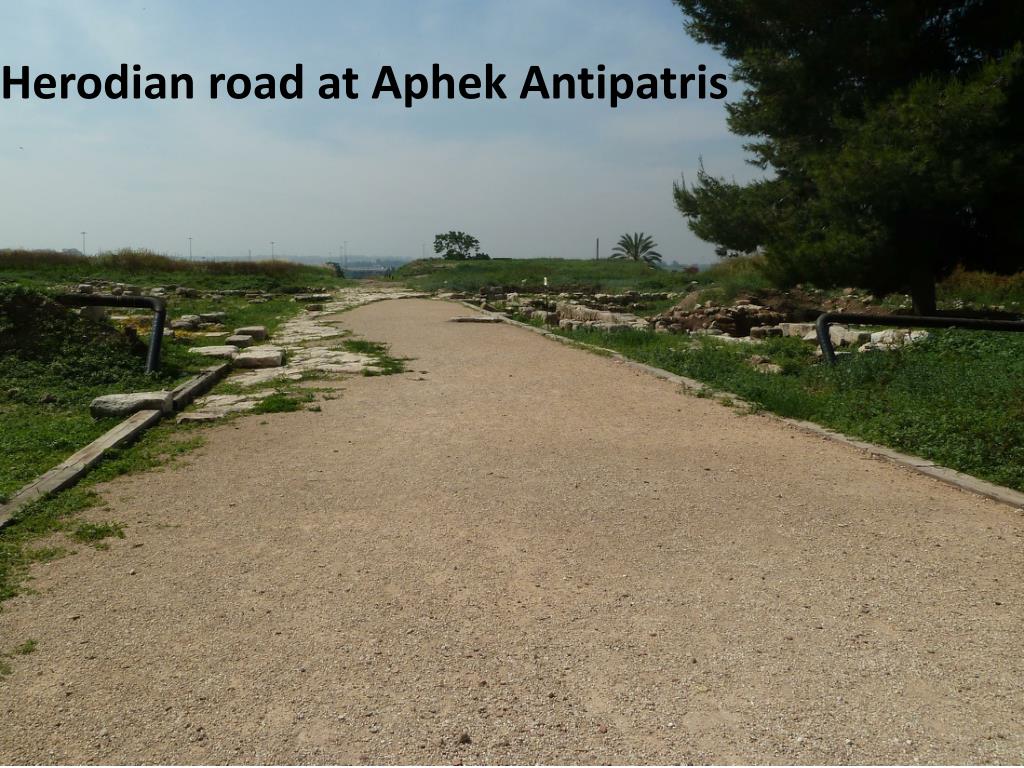
spearmen to accompany Paul to Caesarea Acts 23:23–24. Furthermore, when the security detail arrives before Antipartis (Acts 23:31),
Claudius Lysias allows for the seventy horsemen to go on with him and
Paul to Caesarea, the headquarters of the Procurator Felix (Acts 23:32–35).
The "barracks" referenced in the book of Acts (21.34, 37; 22.24;
23.10, 16, 32), in connection to Claudius Lysias and his cohort are
references to the Tower of Antonia, which Herod the Great rebuilt from a previous structure and named it after Marc Antony.[4]
The Antonia was added on to the NW side of the Temple facilities, "from
which stairs descend into the outer court of the temple" (Acts 21.32,
35, 22.30).[5]
For this reason, the Roman Tribune could hear the commotion caused by
the confusing riot over Paul's presence in the Temple, and respond with
speed (Acts 21.27-32).
Claudius Lysias in the New Testament
The military tribune Claudius Lysias enters the New Testament narrative when he protects Paul of Tarsus
from a hostile Jewish mob on the outside of the Temple grounds in
Jerusalem (Acts 21.30-32). The Acts text does not explicitly state why
the tribune arrests Paul aside from asking "who he was and what he had
done" (Acts 21.33); consequently, it appears Paul is detained for
investigation as reflected later in Paul's interrogation in the Antonian
barracks because he was a cause of instigation among the Jews (Acts
22.23-24).
Claudius Lysias is aware of Jewish anarchistic movements, for
when Paul speaking in Greek asks permission to speak to the shouting
Jewish mob, the tribune appears shocked that he speaks Greek (Acts
21.37). Paul, as a controversial Greek-speaking Hebrew, evidently met
some of the criterion for Lysias to conclude he was a Jewish
revolutionist. Consequently, it appears that Lysias suspects him of
being "the Egyptian" who "stirred up a revolt and led the four thousand men of the Assassins [σικαρίων] out into the wilderness" (Acts 21:38).
This individual operated around A.D. 53, and this revolution amounted
to amassing these four thousand men, positioning themselves upon the
Mount of Olives outside Jerusalem and anticipated the walls of Jerusalem
to collapse at his command. The Romans attacked this band of men, the
Egyptian lost six hundred men, fled into the wilderness where he
disappears awaiting "further revelation". Evidently, "the Egyptian" was
still on the run, wanted by the Roman military and the tribune was going
to see if Paul was this anarchist.[6]
Paul was able to persuade Lysias that he was not an agitator, and
provides him with his provincial citizenship as being from Tarsus, in
the province of Cilicia (Acts 21.39). This was not an "obscure city" and
either this suggests his citizenship could be authenticated, or Paul
distinguished himself from the obscure Egyptian. In either case, Paul's
point is clear, he is not the Egyptian; the tribune accepts Paul's case,
and grants Paul an opportunity to speak the Jews on the steps of the
Temple facilities adjoined to the Antonian fortress (Acts 21.39-40). The
Jews did not respond peaceably to Paul's speech, and Claudius Lysias
decides to take Paul into the "barracks" of Antonia and "examine" him
through the process of binding him to flog him (Acts 22.22-24). On
receiving a report that Paul was a Roman citizen and then making
personal inquiry, Claudius is afraid of having violated the rights of a
Roman by having him bound (see "Roman Citizenship" below). Claudius
desires to arrive at the truth concerning the Jewish case against Paul,
and commands the Sanhedrin
to assemble. Dissension among the Sanhedrin towards Paul arises again,
and causes Claudius Lysias to order his men to take Paul to the safety
of the Antonian barracks (Acts 22.30-23.10).
Upon learning of a plot to kill Paul, Claudius Lysias summoned
two of his army officers and commanded them to get ready 200 soldiers,
70 horsemen, and 200 spearmen to leave for Caesarea Maritima. In compliance with Roman law, he also sent a statement of the case to the procurator Antonius Felix. The letter reads:
- Claudius Lysias, to his Excellency the governor Felix, greetings.
- This man was seized by the Jews and was about to be killed by
them when I came upon them with the soldiers and rescued him, having
learned that he was a Roman citizen. And desiring to know the charge for
which they were accusing him, I brought him down to their council. I
found that he was being accused about questions of their law, but
charged with nothing deserving death or imprisonment.
- And when it was disclosed to me that there would be a plot
against the man, I sent him to you at once, ordering his accusers also
to state before you what they have against him. (Acts 23.26-30 English
Standard Version)
The letter format is consistent with the general format in the
Graeco-Roman world, of "author" to "recipient" with a "greeting" with
the subsequent content of the reason for the letter.[7] This letter, however, was not altogether factual. It "is an interesting specimen of Roman military correspondence" (Acts 23:26–30).[8]
Although acknowledging Paul's innocence, Claudius Lysias gave the
impression that he had rescued Paul because of having learned that the
apostle was a Roman, whereas in reality he had violated Paul's
citizenship rights by having him bound and even ordering that he be
examined under scourgings. As to the disciple Luke's knowledge of the letter's contents, it may be that the letter itself was read at the time Paul's case was heard.
Luke 4 HCSB
24 He also said, “I assure you: No prophet is accepted in his hometown. 25 But I say to you, there were certainly many widows in Israel in Elijah’s days, when the sky was shut up for three years and six months while a great famine came over all the land. 26 Yet Elijah was not sent to any of them—but to a widow at Zarephath in Sidon. 27 And in the prophet Elisha’s time, there were many in Israel who had serious skin diseases, yet not one of them was healed —only Naaman the Syrian.”
28 When they heard this, everyone in the synagogue was enraged. 29 They got up, drove Him out of town, and brought Him to the edge of the hill that their town was built on, intending to hurl Him over the cliff. 30 But He passed right through the crowd and went on His way.
9 Make every effort to come to me soon, 10 for Demas has deserted me, because he loved this present world, and has gone to Thessalonica. Crescens has gone to Galatia, Titus to Dalmatia. 11 Only Luke is with me. Bring Mark with you, for he is useful to me in the ministry. 12 I have sent Tychicus to Ephesus. 13 When you come, bring the cloak I left in Troas with Carpus, as well as the scrolls, especially the parchments. 14 Alexander the coppersmith did great harm to me. The Lord will repay him according to his works. 15 Watch out for him yourself because he strongly opposed our words.
16 At my first defense, no one stood by me, but everyone deserted me. May it not be counted against them. 17 But the Lord stood with me and strengthened me, so that the proclamation might be fully made through me and all the Gentiles might hear. So I was rescued from the lion’s mouth. 18 The Lord will rescue me from every evil work and will bring me safely into His heavenly kingdom. To Him be the glory forever and ever! Amen.
Psalm 120
A Cry for Truth and Peace
A song of ascents.
1 In my distress I called to the Lord,
and He answered me.
2 “Lord, deliver me from lying lips
and a deceitful tongue.”
3 What will He give you,
and what will He do to you,
you deceitful tongue?
4 A warrior’s sharp arrows
with burning charcoal!
5 What misery that I have stayed in Meshech,
that I have lived among the tents of Kedar!
6 I have lived too long
with those who hate peace.
7 I am for peace; but when I speak,
they are for war.
Holman Christian Standard Bible
Resurrection Essential to the Faith
12 Now if Christ is proclaimed as raised from the dead, how can some of you say, “There is no resurrection of the dead”? 13 But if there is no resurrection of the dead, then Christ has not been raised; 14 and if Christ has not been raised, then our proclamation is without foundation, and so is your faith. 15 In addition, we are found to be false witnesses about God, because we have testified about God that He raised up Christ—whom He did not raise up if in fact the dead are not raised. 16 For if the dead are not raised, Christ has not been raised. 17 And if Christ has not been raised, your faith is worthless; you are still in your sins. 18 Therefore, those who have fallen asleep in Christ have also perished. 19 If we have put our hope in Christ for this life only, we should be pitied more than anyone.
20 But now Christ has been raised from the dead, the firstfruits of those who have fallen asleep. 21 For since death came through a man, the resurrection of the dead also comes through a man. 22 For as in Adam all die, so also in Christ all will be made alive. 23 But each in his own order: Christ, the firstfruits; afterward, at His coming, those who belong to Christ. 24 Then comes the end, when He hands over the kingdom to God the Father, when He abolishes all rule and all authority and power. 25 For He must reign until He puts all His enemies under His feet. 26 The last enemy to be abolished is death. 27 For God has put everything under His feet. But when it says “everything” is put under Him, it is obvious that He who puts everything under Him is the exception. 28 And when everything is subject to Christ, then the Son Himself will also be subject to the One who subjected everything to Him, so that God may be all in all.
Holman Christian Standard Bible
28 Don’t fear those who kill the body but are not able to kill the soul; rather, fear Him who is able to destroy both soul and body in hell.
Acts 17:18 Then also, some of the Epicurean and Stoic philosophers argued with him. Some said, “What is this pseudo-intellectual trying to say?”